Building date: 1835
Original use:
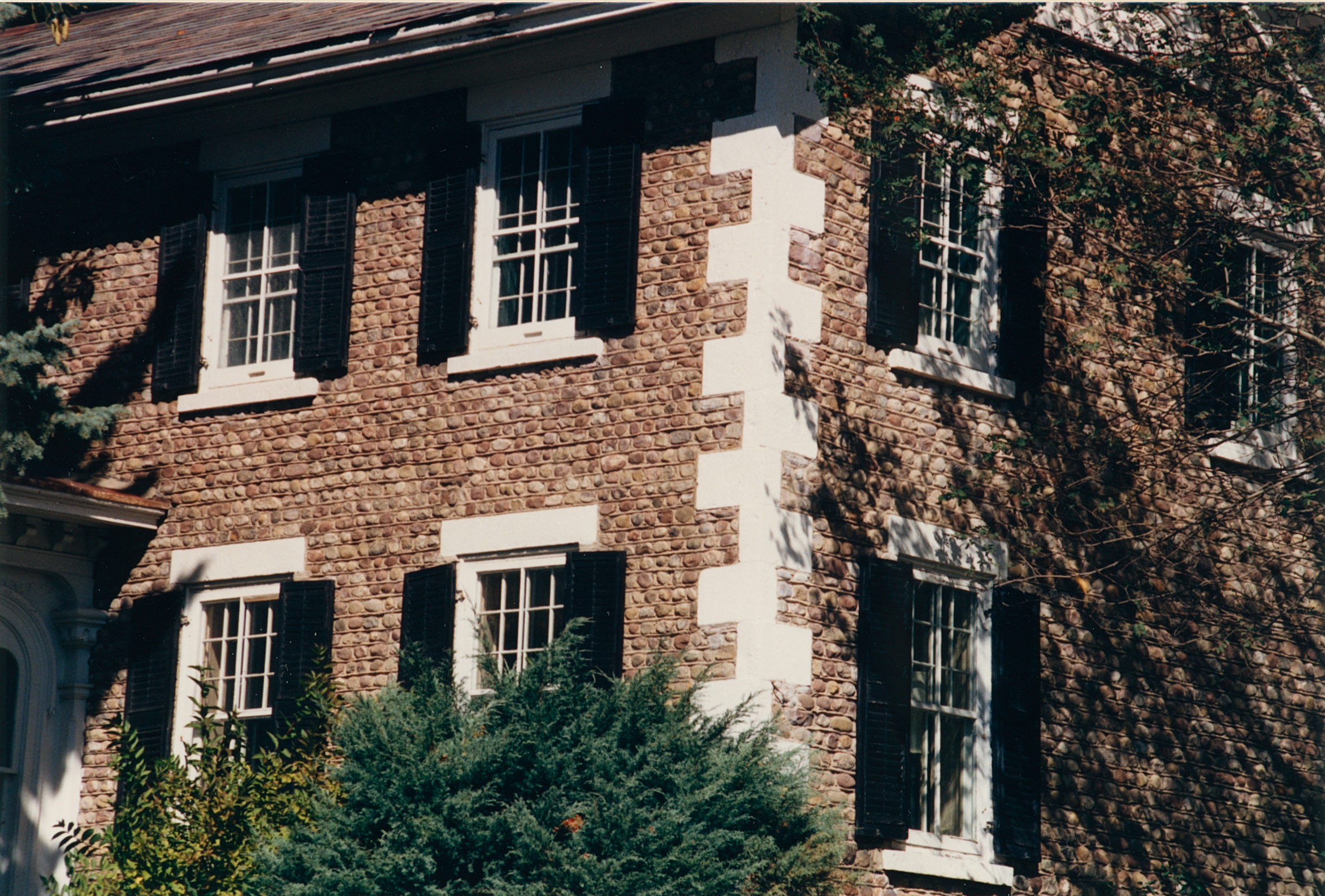
Corner structures:
Mortar application and content: Vertical heavy
Types and uses of stones:
Types and choice of windows:
Structures with similar masonry details:
Masons who worked on building:
Unique features:
Map views courtesy Google Maps. Address is Google Earth confirmed; 43°01'42.10"N 77°26'19.23"W. Current owner of record, High Point Retail LLC (Starbucks) as of the 2019 Tax Roll.
Town of Victor and Ontario County Maps.
Note that the roads where this structure is located have been significantly altered due to the mall and commercialization in the area and differ from this Roudabush ca. 1975 era map; therefore, the location as shown on this map is approximate. For the exact location, access the Google Maps information provided on this page.
"The Bonesteel heritage lives on"
(Thanks to Starbucks Coffee)
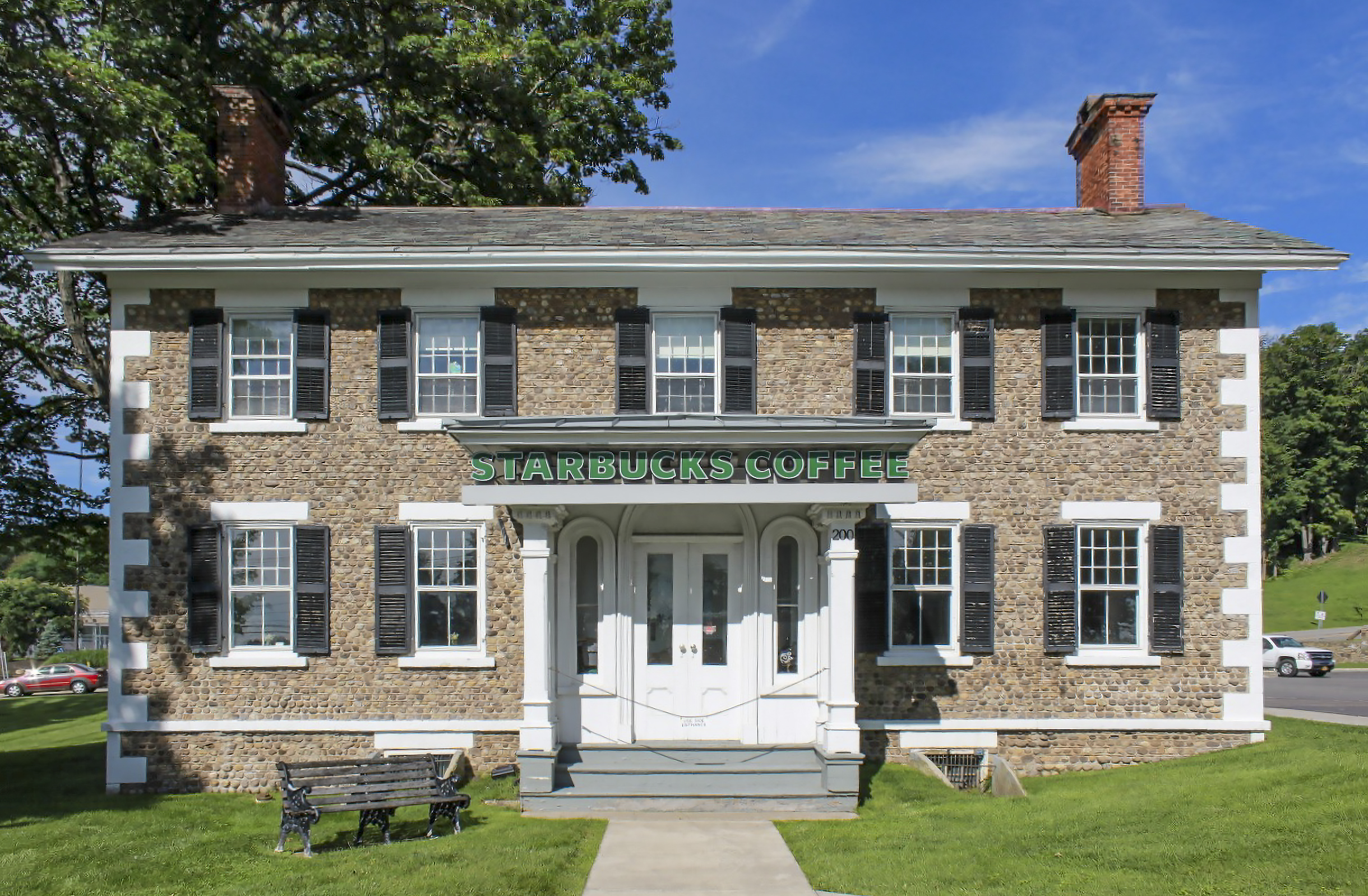
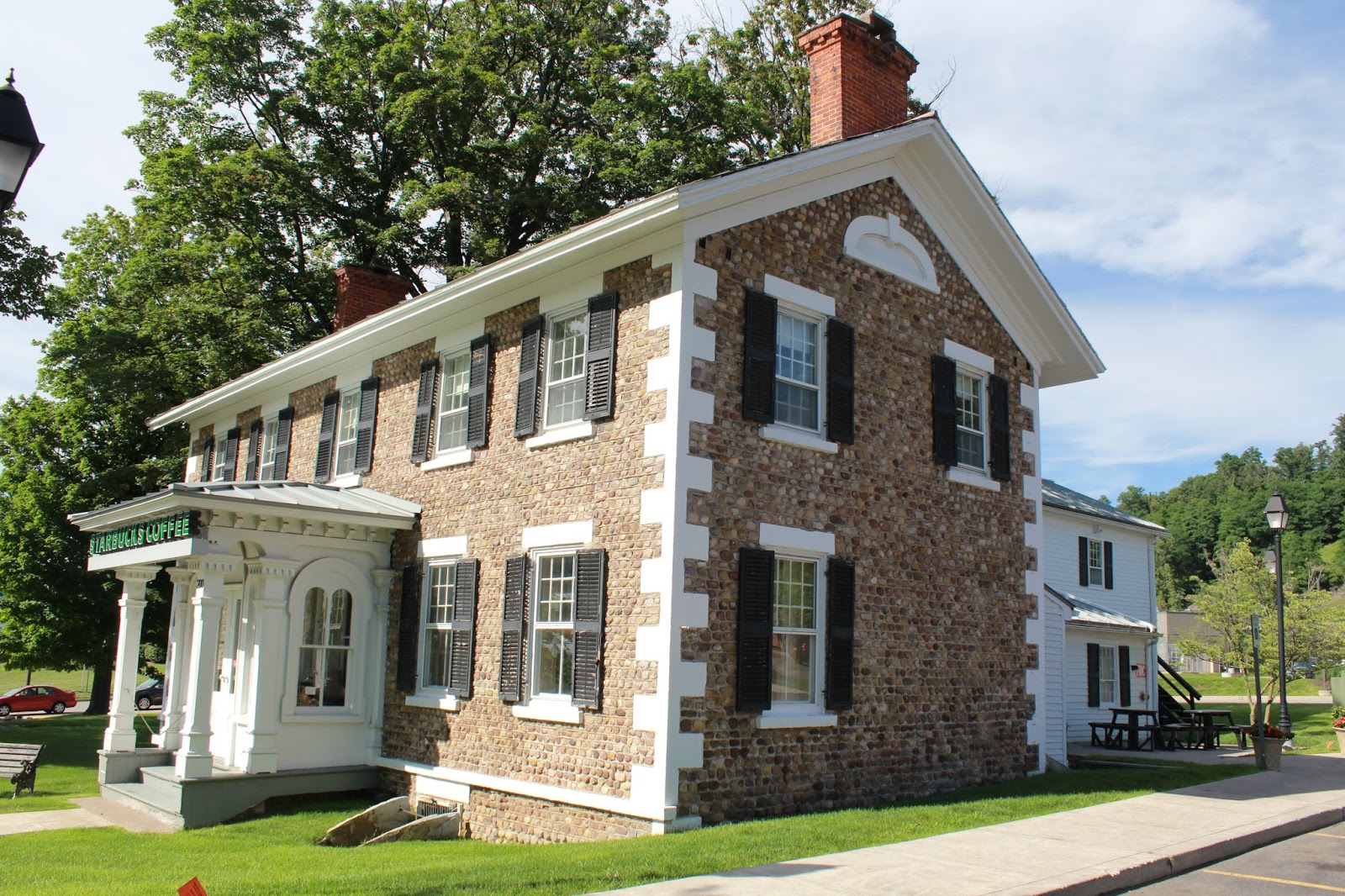
Bonesteel House, 200 High Point Dr. [953 High St. Extension (road has changed)], Victor, built in 1835 by Philip P. Bonesteel. It is Greek Revival with Italianate porch.
This home has long been a part of the landscape in Victor. It was built by Phillip P. Bonesteel (whose German ancestors went by Bohenstielen), who settled with his family in Victor in the early 1800s. He purchased a 100-acre tract of land where he established a farm. Taking advantage of the abundance of cobblestones on his property, in 1835, Bonesteel built a two-story Greek Revival style along what is now Route 96.
History of Ontario Co, Plate LXXII preceding Page 197, Everts, Ensign & Everts, Philadelphia, 1878(Bonesteel described his cost-efficient homestead in letter to the editor of Buell's Cultivator and the Genesee Farmer, Vol. IX No. 7, 1842.)
Messrs Editors:
In 1835 I built me a house of cobblestone, of the following description: front 45 x 83 feet, 2 stories, forming an "L" in rear of 65 x 23 ft., single story for kitchen, washroom and wood shed. My plan for thickness of wall was: the cellar wall 20 inches thick to first floor, drop off two inches to second floor, then drop off two inches, and extend out to top.
Sort your stones so as to have the outside course three or four inches, with straight lines for cement. Take the coarsest of sand for the stone, and a fine sand for brick. I used the common stone lime, one bushel of lime to seven of sand for stone, and the same kind of lime, one bushel to two of sand for brick.
I furnished all materials on the ground, and paid my masons $3.75 per hundred feet. He furnished his own tenders and made his own mortar, built his own scaffolds and tended themselves. I boarded them.
I think I have as good a house as can be made of the same materials. There is not a crack in the walls that you can stick a pin in as yet. The stone, I do not consider any expense as it frees the land of them. There is no painting to be done to it, as is required of brick or wood, it makes the strongest of walls, and I think the neatest and cheapest building that can be made.
You may calculate the expense of the building at so much a perch, according to the size you wish to build. I did not keep an exact account of my building, as the stone, sand, and lime were bought at leisure spells.P. P. Bonesteel
Victor-Ontario County
March 1842.
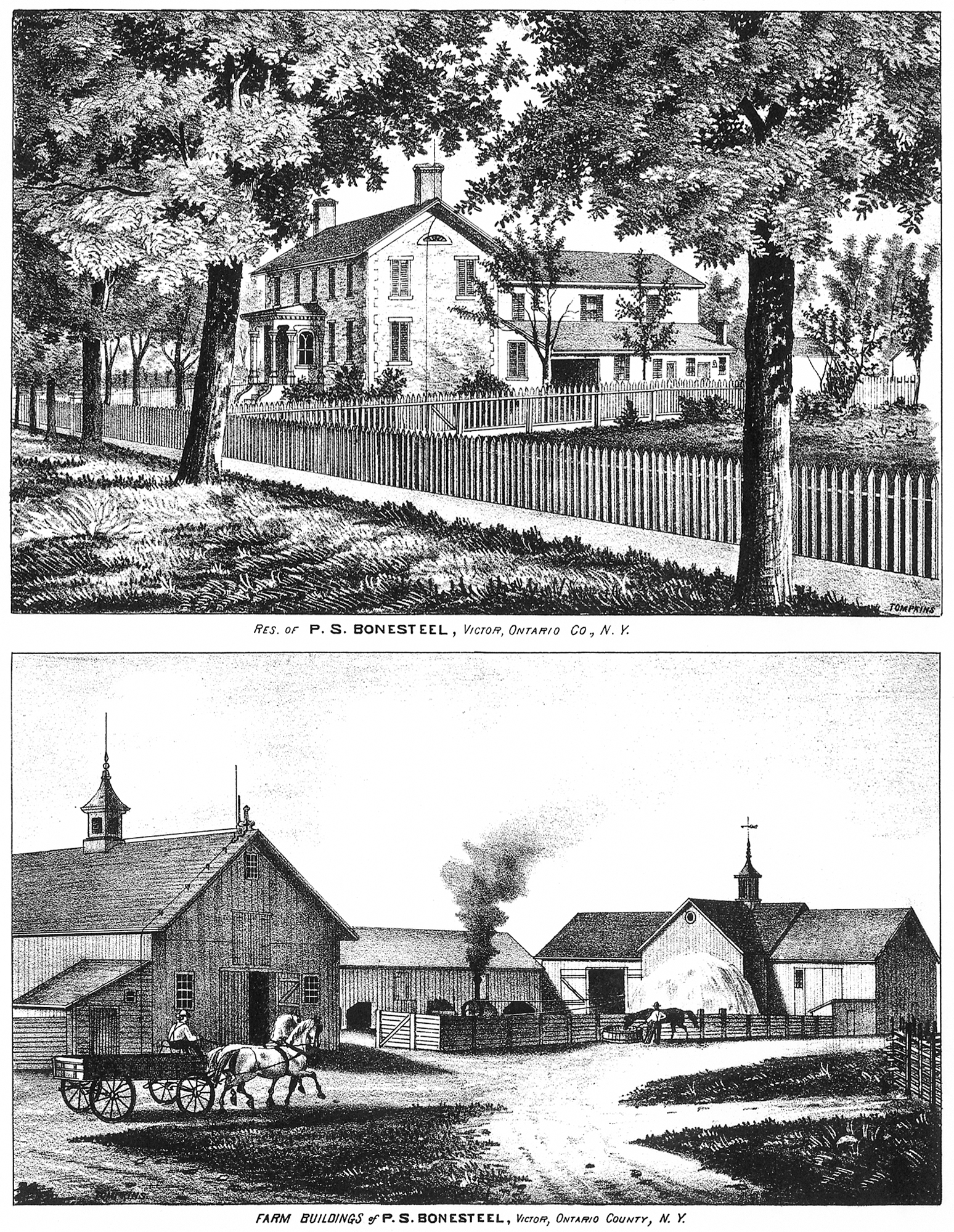
Other area homebuilders and masons clearly shared Bonesteel's sentiment. Victor boasted 26 cobblestone structures by the mid 19th century. Upon Philip Bonesteel's death in 1848, the homestead was passed on to his son Peter. Described by the Victor Herald as "a strong temperance man, (with) liberal views and of a generous disposition," Peter Bonesteel ran the family farm that surrounded his house for several decades.
While improving upon his farm and tending to crops, Peter Bonesteel modernized the house by adding the second floor on the house's rear wing and the Italianate front porch. The last generation of Bonesteels to live there included Peter's son Frank and his wife, Sarah Hall Bonesteel. She was one of the first female students at Massachusetts Institute of Technology and an erstwhile tutor of Helen Keller.
Her husband having passed away 21 years into their marriage, Sarah lived in the house by herself until 1946, after which its use was sporadic. It was allegedly home to a commune in the 1960s, but it experienced a period of decline in the last third of the 20th century.
Meanwhile, developers began setting their sights on the Bonesteel property surrounding the homestead. Several acres were purchased in 1968 for the construction of Interstate 490. Most of the original Bonesteel property was purchased to make way for the Eastview Mall, which opened in 1971.
The old house overlooking the new mall stood vacant for years until the Victor Association of Cultural and Performing Arts leased the building in 1983. Dubbed the Cobblestone Arts Center, the building became a creative hub, hosting classes in theater, dance, violin, piano, painting and sculpture.
After the center relocated after about a decade, the cobblestone home once again entered an extended period of vacancy. It found new life in 2007 when it reopened as a Starbucks. Since then an extensive array of shops and eateries now mark the spot where the Bonesteels' crops once grew. But the family's legacy endures after nearly two centuries.
Richard Palmer blog.
Cobblestone Trivia from the Cobblestone Museum Resource Center
Sarah Hall, born in the early 1870's, as a youth traveled the high seas with her father, the captain of a merchant vessel out of Boston. As a young adult Sarah was educated at the Massachusetts Institute of Technology, and gained the distinction of being the first woman to graduate from that institution with a major in Mathematics.
It was at MIT that she met and married a young man from Western New York State. When she moved with her new husband, she left behind her a large circle of friends which included people in the arts and sciences such as poet Ralph Waldo Emerson. Sarah was a most accomplished young woman, while her hobbies included spinning and weaving, she also was a teacher, an artist and at one time tutor for Helen Keller.
When she moved to Western New York with her new husband, she made their home a gathering spot for local artists and intellectuals from 1898 to well into the second quarter of the 20th century. She also invited children from the neighboring cobblestone schoolhouse to her home where they could dress up in costumes and present dramas in the second floor ballroom.
Anyone who has seen the cobblestone literature such as "Cobblestone Masonry", "Cobblestone Landmarks of Western New York State" or Ontario County Cobblestones has read the article written by P. P. Bonesteel in 1842 to "The Cultivator" [see above], describing the building of his cobblestone house in Victor. It was to a descendent of Mr. Bonesteel, P. Frank Bonesteel, whom Sarah married and the family cobblestone home into which she moved. The farm house still stands, today directly across from East View Mall. Coincidently, or perhaps, appropriately in 1984 became the Victor Association of Cultural and Performing Arts [Now a Starbuck'S Coffee].
"The Cobblestone Houses of Upstate New York", compiled by Dorothy Wells Pease. Research done in collaboration with Hazed B. Jeffery, supplemented with material furnished by Carl F. Schmidt, 1941. Reference the fourteenth paragraph on page 17.
"The Geological Origin of Cobblestone Architecture", by Gerda Peterich. Specific reference to this structure on page 18.
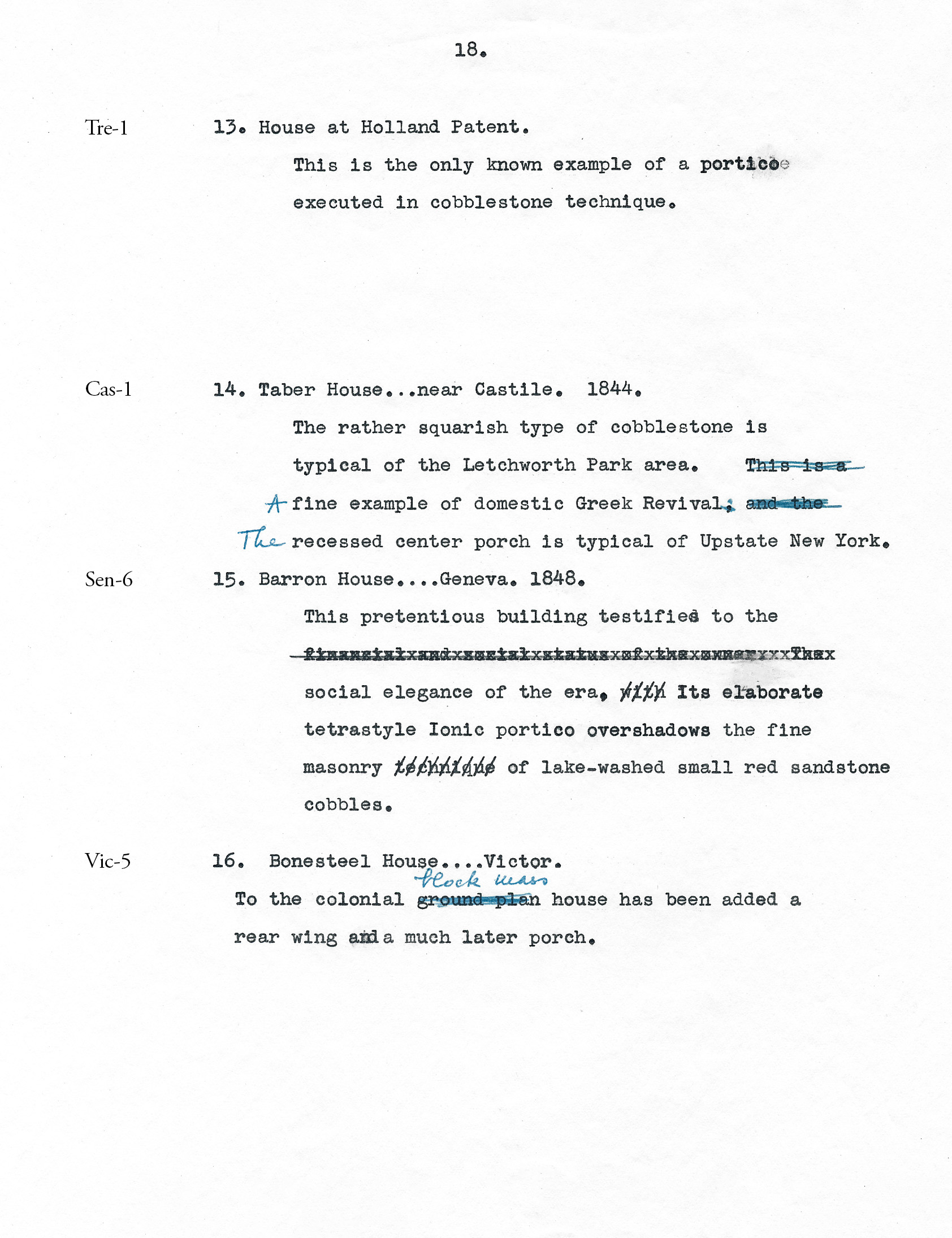
"Cobblestone Architecture in the Rochester Area", by Gerda Peterich, 1953. Reference Bonesteel House and figure 22. Editor's Note: This digitized version of the original typescript manuscript is reformatted for digital display, edited for errors, and includes blue tinted highlighted links to improve access within the document, to the appropriate structure pages in the Cobblestone Info Base, or to external resources on the internet. This document is one of two known typescript drafts, likely a thesis or essay bound as a book and apparently never published. One is available in the Cobblestone Museum Resource Center, the other in the University of Rochester Art and Music Library. A companion or precursor typed paper of the same title exists, perhaps used for a talk and/or photographic display of cobblestone structures.
"Victor Cobblestone Reborn as Arts Center", by Sebby Wilson Jacobson, Times-Union, 6/13/1984.
"Cobblestone Arts Center", Democrat and Chronicle, 6/17/1984.
Editor's Note: The Bonesteel House is now a Starbuck's Coffee.
A Driving Tour of Historic Victor, page 3, # 3
Editor's Note: There is a Bonsteel vs. Bonesteel spelling difference in some of the following publications.
- "Cobblestone Architecture", 1944, Carl Schmidt: Name reference, Bonesteel House
- Page 22, Page 43
- "Cobblestone Architecture of Upstate New York", by Gerda Peterich, Journal of the Society of Architectural Historians, Vol 15, Issue 2 1956, Pages 18. By permission of the University of California Press, "The requested material is in the public domain and you are welcome to use it."
- "Cobblestone Masonry", 1966, Carl Schmidt: Name reference, Bonesteel - Roach House
- Page 111, Comparison of Cobblestones and Quoins Page 259
- "Cobblestone Landmarks of New York State", 1978, by Olaf William Shelgren, Jr., Cary Lattin, and Robert W. Frasch, Photographs by Gerda Peterich: Name reference, House
- Page 111
- "The Era of Cobblestone Architecture", unpublished manuscript 1972. To access the manuscript content about this structure, see 89, 90. Ontario County, Bonesteel-Roach House.
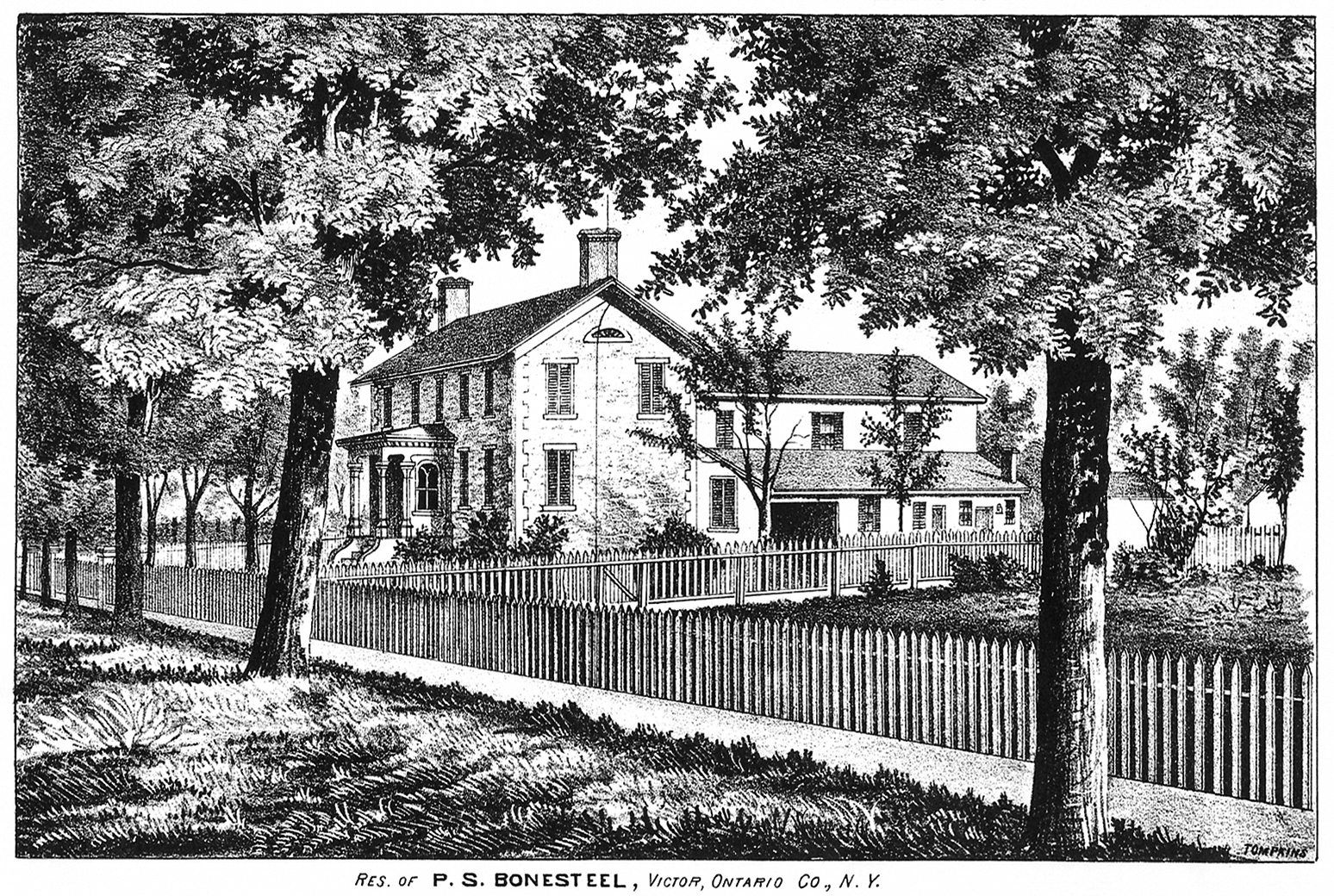

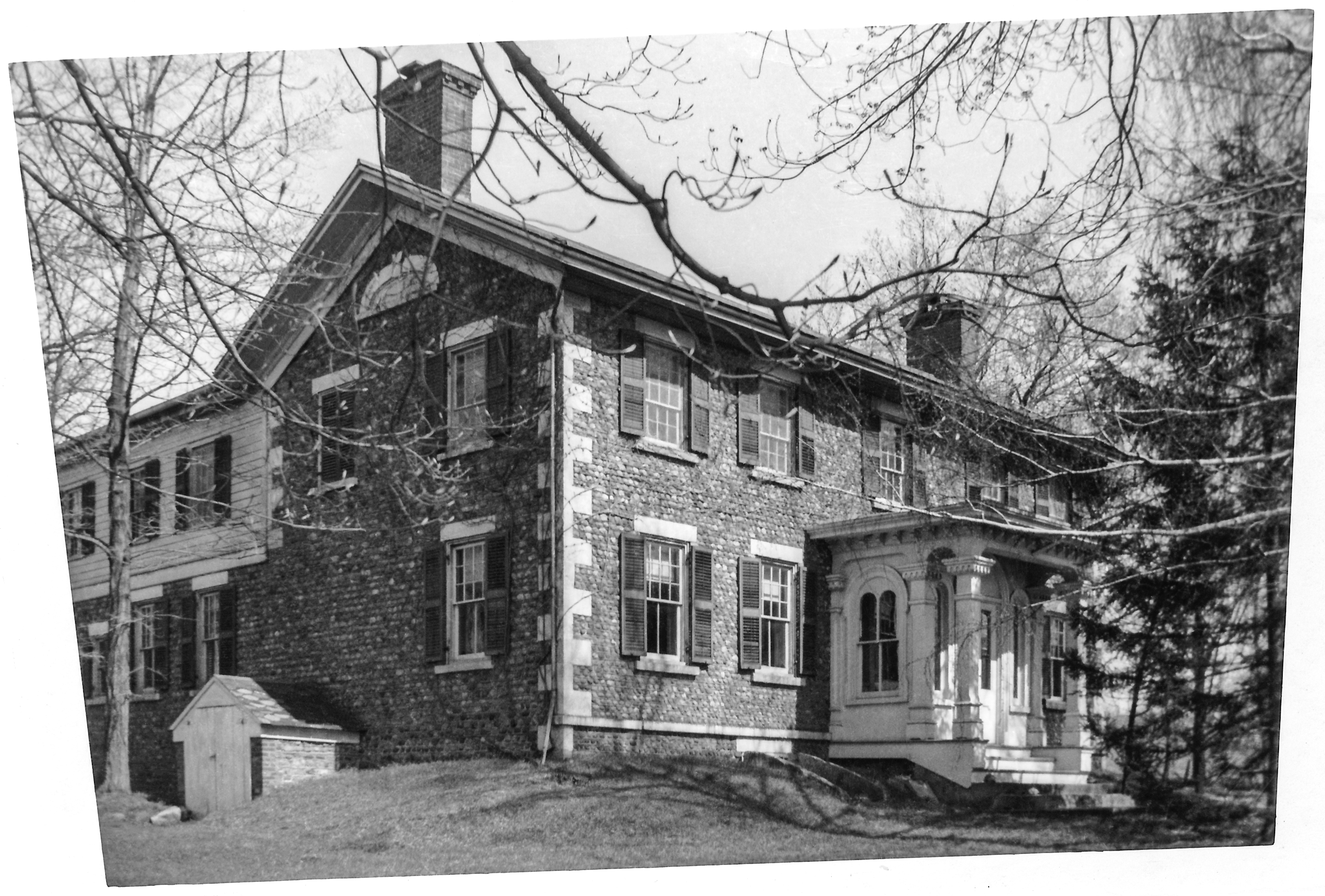
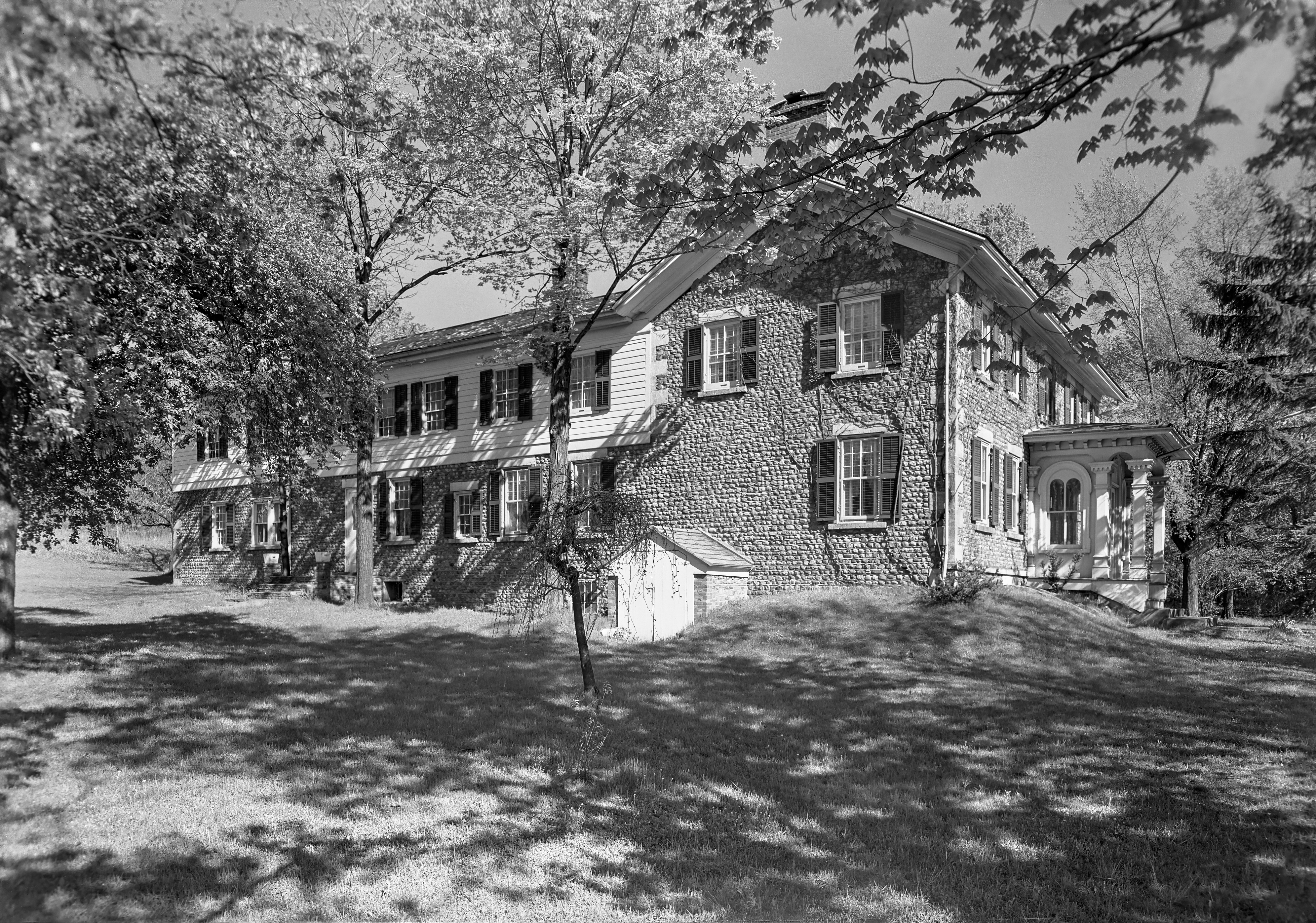
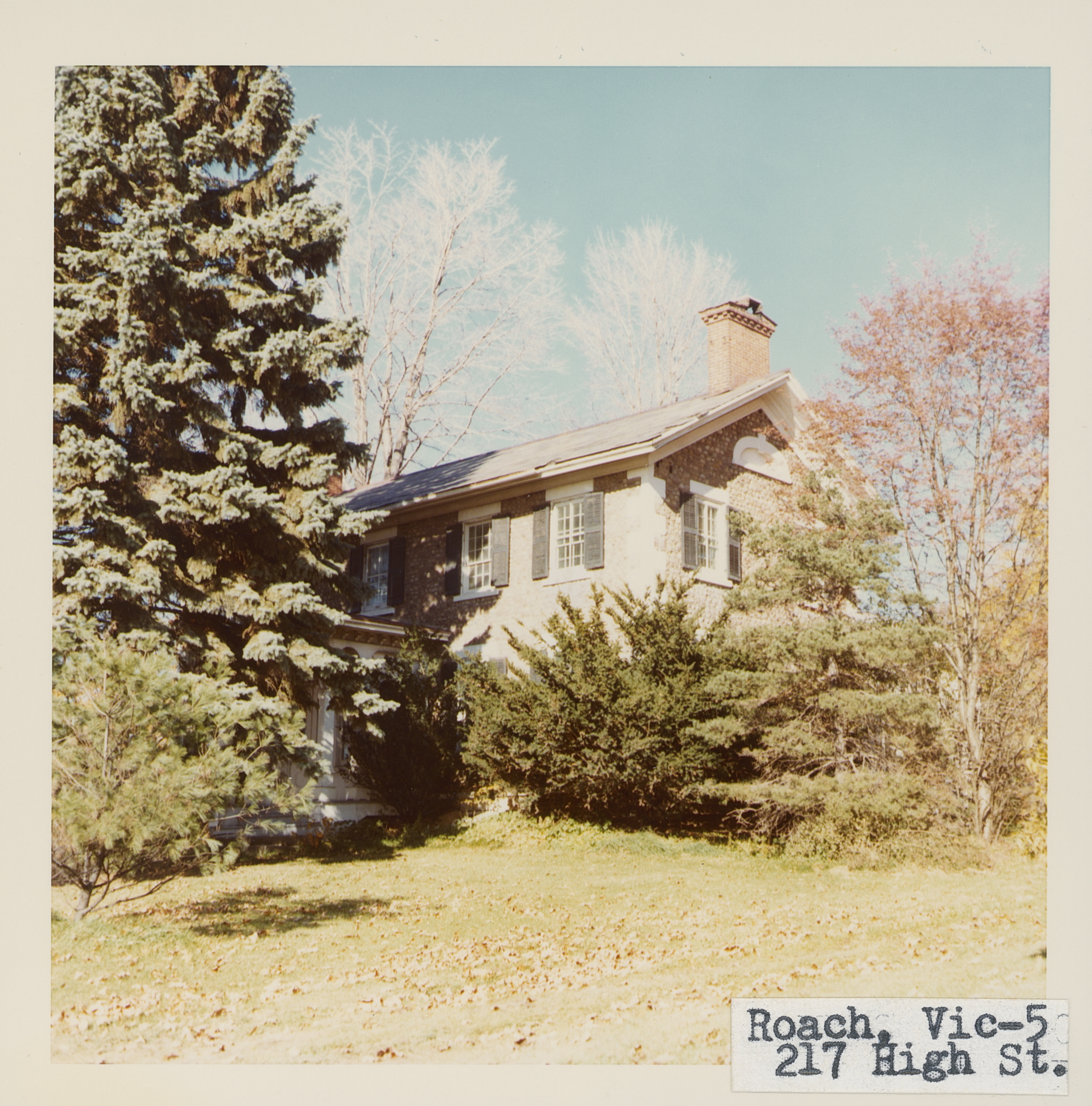
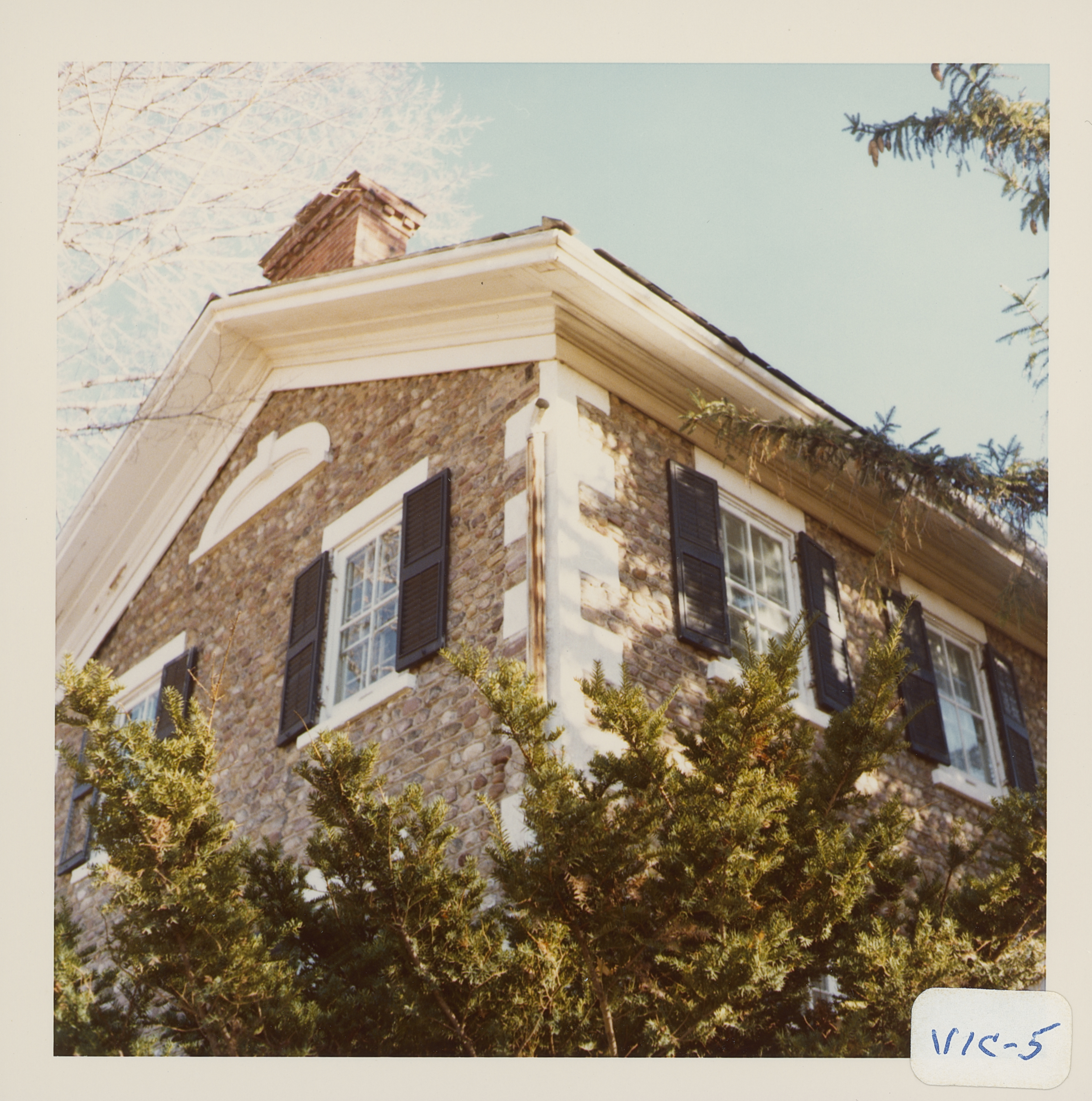
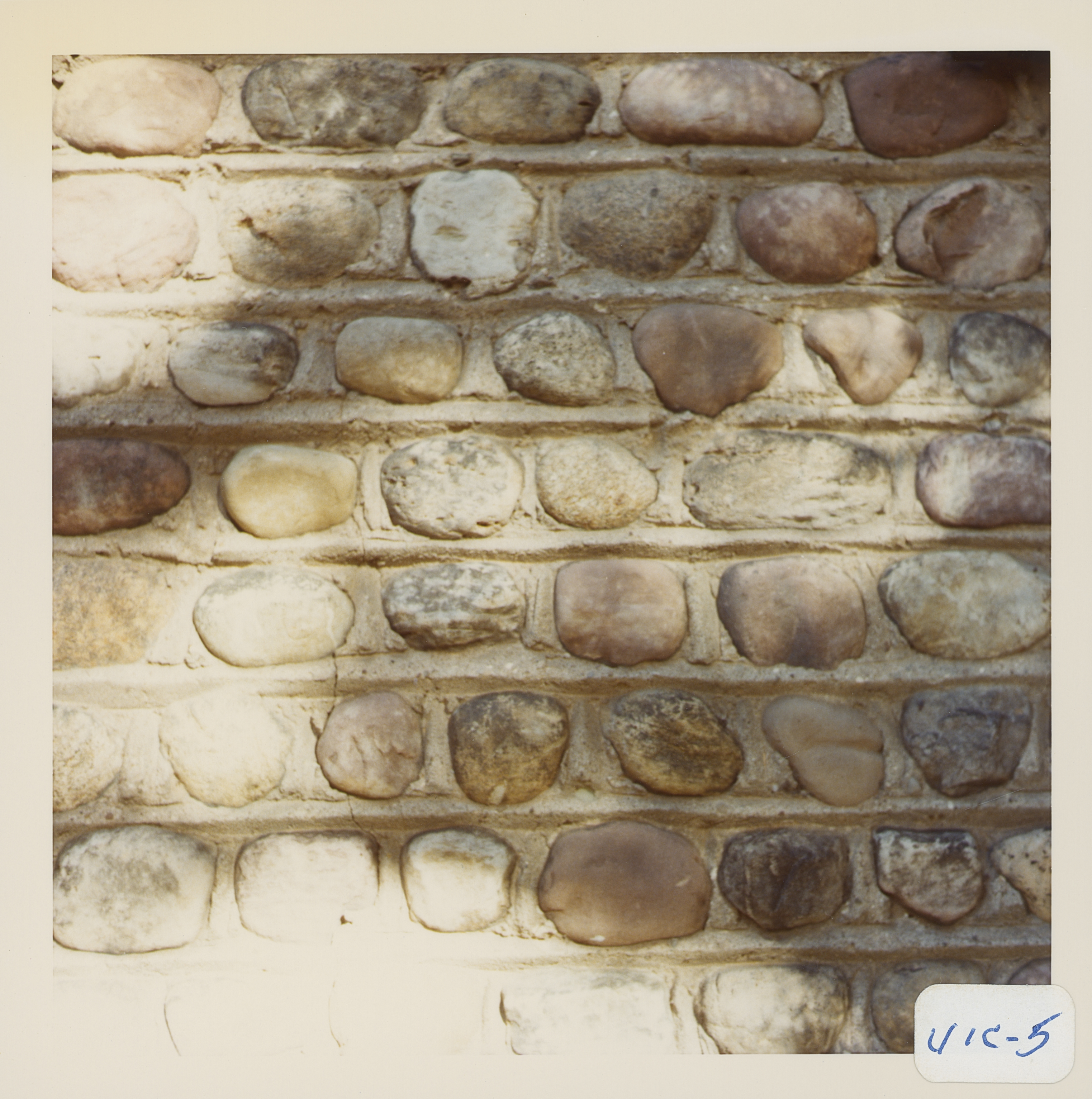
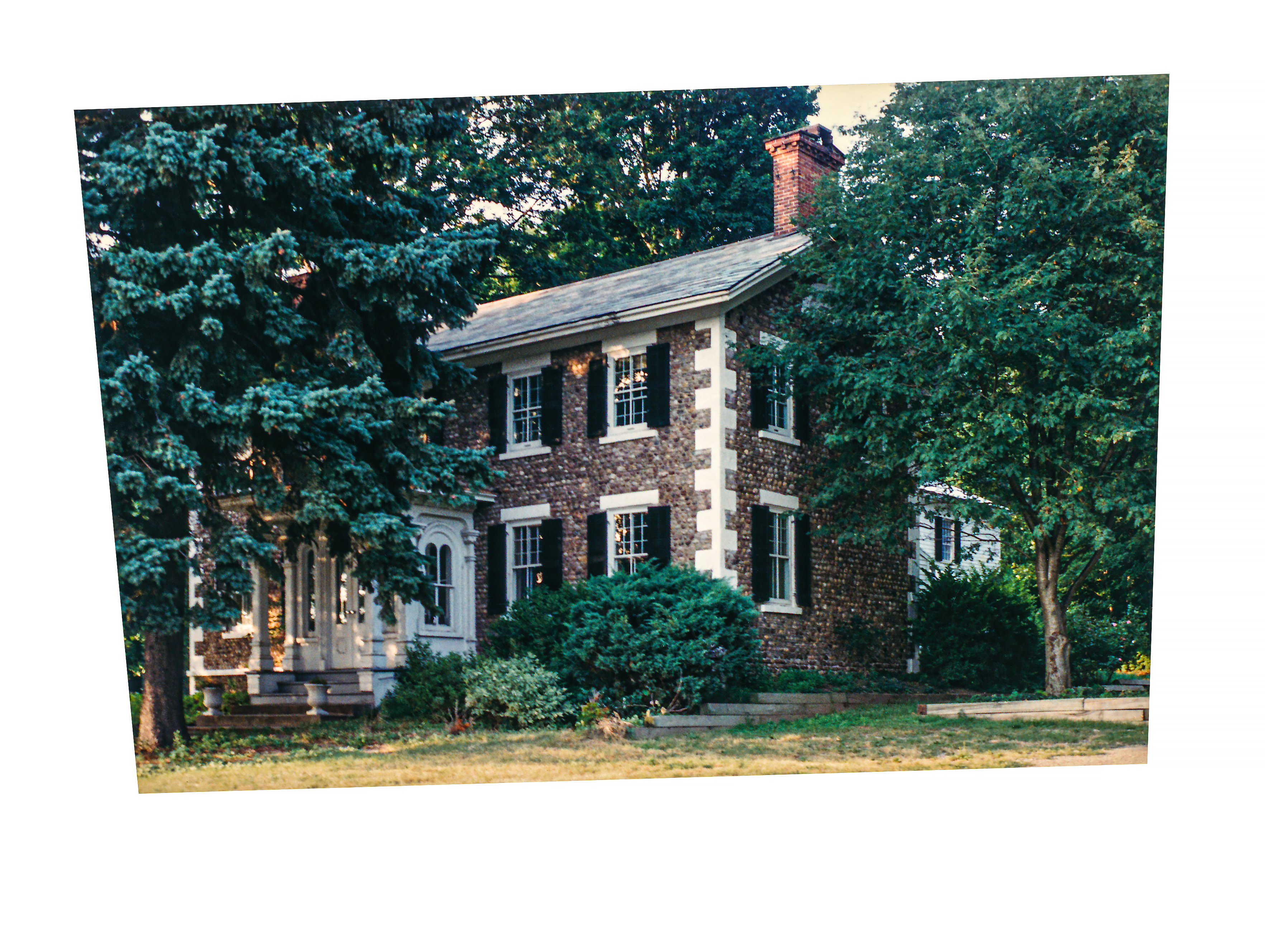
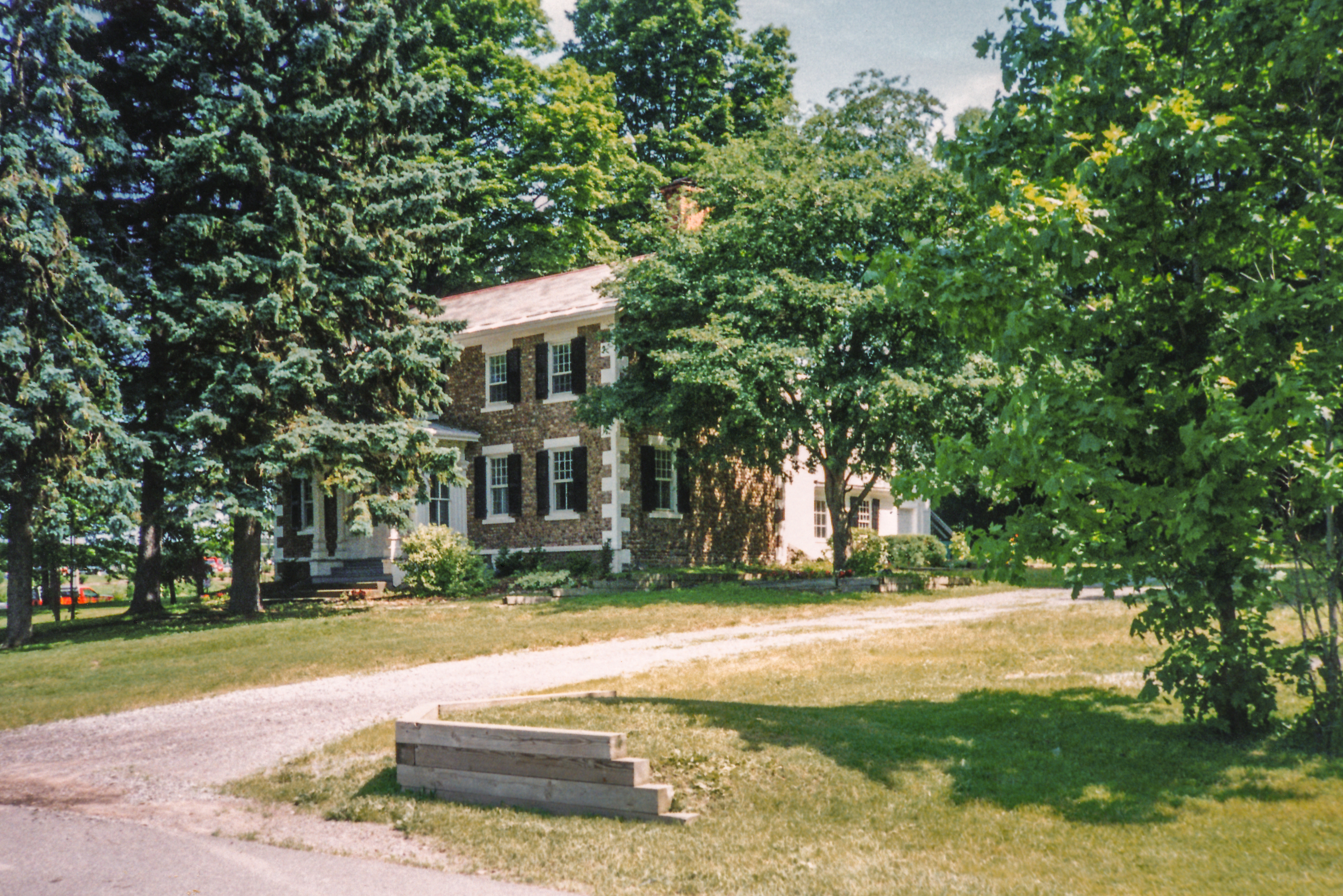
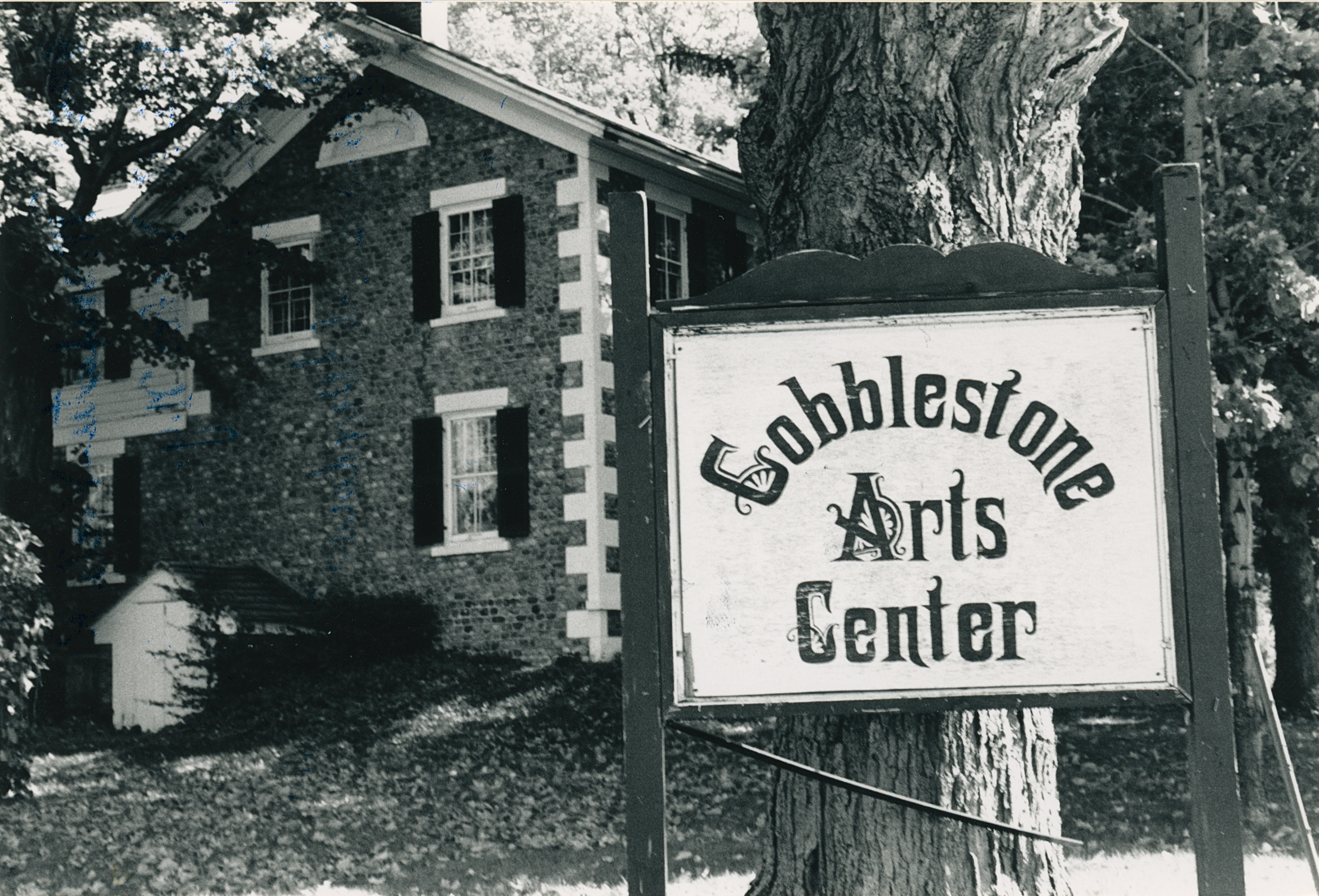
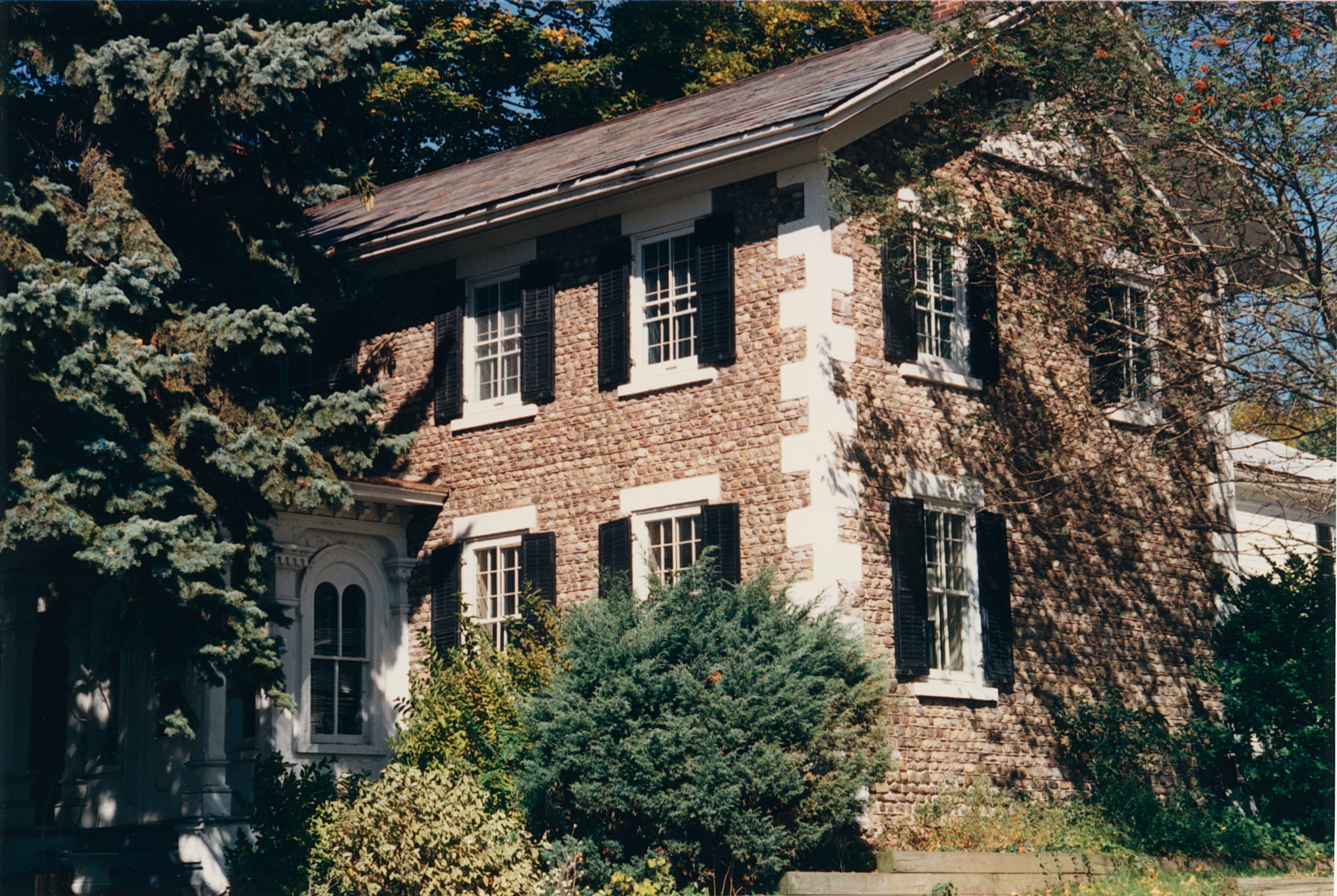
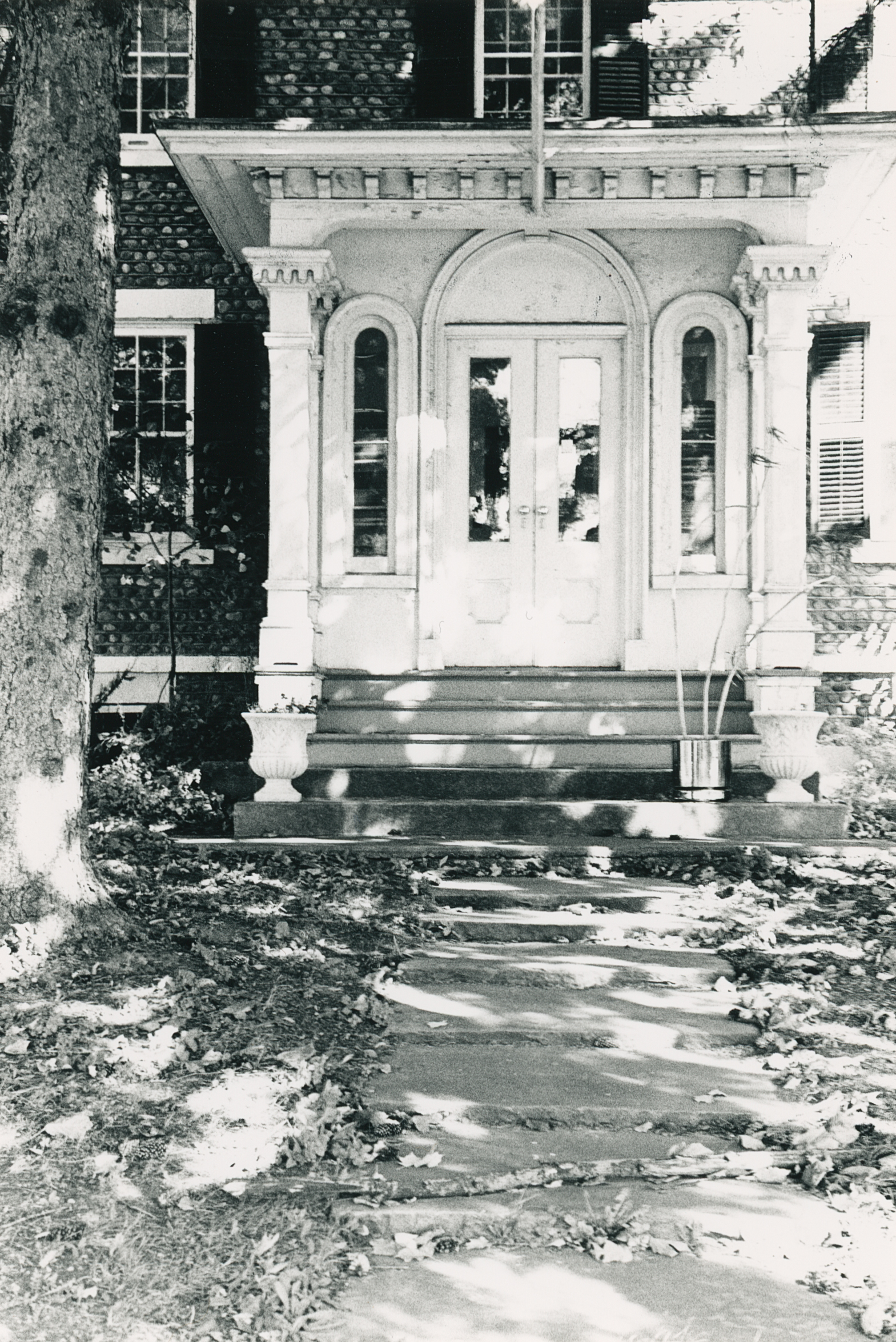
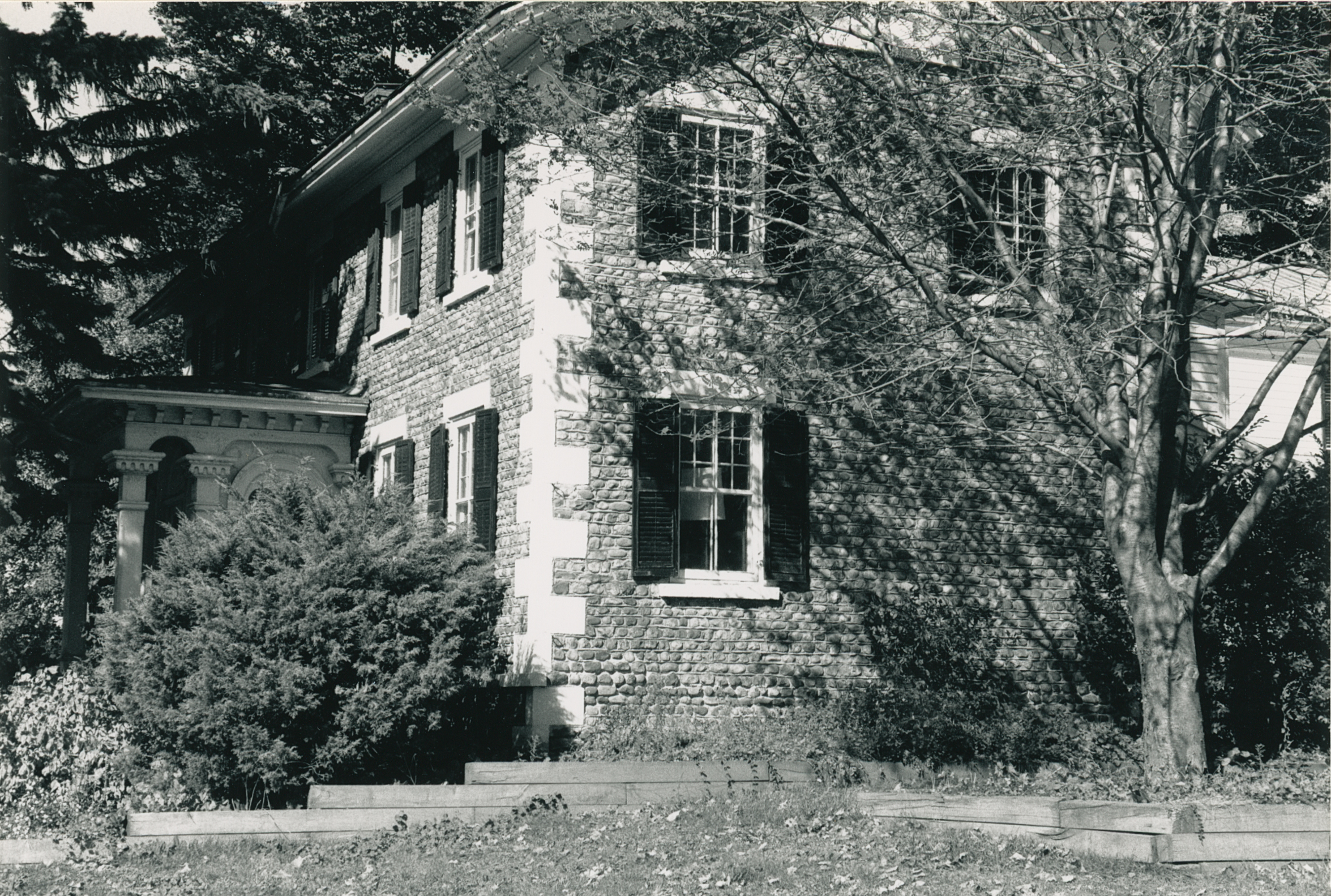
¹ Image courtesy History of Ontario Co, Plate LXXII preceding Page 197, Everts, Ensign & Everts, Philadelphia, 1878.
² Image courtesy Victor Town Historian.
³ Image courtesy Cobblestone Museum.
4 Photography courtesy Gerda Peterich. Cobblestone Museum.
5 Photography courtesy Martin and Sheila Wolfish.
6 Photography courtesy Richard Palmer.
